
Your sales team isn’t short on leads. They’re short on the right ones. Every hour spent on a prospect who was never going to buy is an hour taken from someone who would.
Knowing how to qualify leads for sales isn’t a soft skill. Get this right and your pipeline gets cleaner, your close rates go up, and your team stops burning out on conversations that go nowhere.
What Is Lead Qualification?
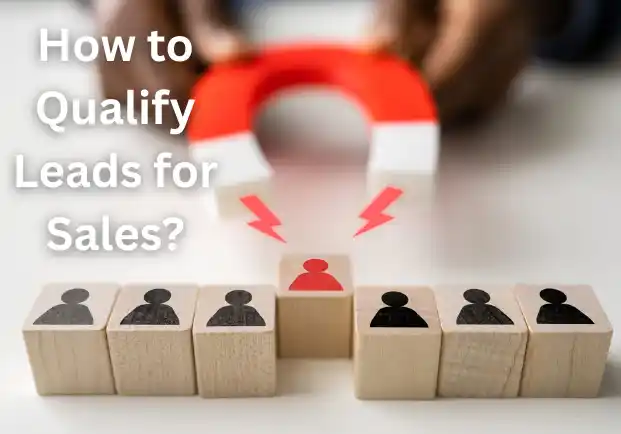
- Sales lead qualification is the process of evaluating whether a prospect deserves your sales team’s time based on how well they fit what you sell and how ready they are to act on it.
- Interest alone doesn’t qualify anyone. A prospect can fill out your form, reply to an email, or even book a call with genuine curiosity and still never close; because the budget isn’t there, the timing is wrong, or the decision-maker isn’t involved.
- Sales lead qualification filters on facts, not on feelings, so your team invests its hours where the probability of a deal is real.
Qualified Lead vs Unqualified Lead
The distinction matters more than most teams acknowledge:
| Key Aspect | Qualified Lead | Unqualified Lead |
| Core Definition | Pass both core benchmarks: ICP Fit (Ideal Customer Profile) and Buying Readiness. | Fail at least one benchmark: either lack of ICP fit or missing key readiness triggers. |
| Evaluation Criteria | • Active, high-consequence pain point. • Decision-maker with direct authority. • Concrete timeline tied to a key trigger. • Allocated budget/resources. | • Fit Failure: Mismatched business size, industry, or core use case. • Readiness Failure: Timing off, frozen budget, or no internal champion. |
| Lead Status | Permanent / Actionable: primed for immediate sales discovery and bottom-of-funnel pipeline. | • Fit Failure: Permanently disqualified. • Readiness Failure: Temporarily sidelined. |
| Required Sales Play | Fast-track immediately to AEs (Account Executives) or Closers for direct pipeline progression. | Park and Nurture: Log reason and target follow-up date in CRM; re-engage when triggers or conditions align. |
| Operational Impact | Maximizes AE capacity, speeds up deal velocity, and boosts win rates. | Confusing the two clogs AE calendars with low-intent chats while high-intent ops go cold. |
Read More: How to Generate Sales Leads for Your Business
The Importance of Lead Qualification
Sales reps spend 60% of their time on work that isn’t selling. Every unqualified conversation that reaches a closer draws directly from the hours that could go to real deals.
Lead qualification solves this by creating a filter before time is spent: Businesses that invest in learning how to qualify leads for sales consistently outperform those that don’t in close rates, cycle length, and team retention. The benefits show up fast:
- Higher close rates: When every conversation your team has is with a prospect who fits your offer and is ready to act, your close rate reflects that.
- Shorter sales cycles: Qualified prospects move faster because the fundamentals are already confirmed. There’s no discovery call revealing a fatal objection that should have been caught in week one.
- Better sales team morale: Nothing burns out a sales team faster than working hard on leads that were never real. Qualified pipeline gives your team legitimate momentum.
- Cleaner forecasting: When qualified means something specific and consistent, your forecast becomes a number you can actually act on.
Lead qualification helps businesses focus their sales efforts on prospects who are more likely to become customers. So book a call today to discuss your lead generation needs.
Common Types of Qualified Leads
Not all qualified leads are the same, they’re qualified at different stages of your funnel.
- Marketing Qualified Lead (MQL): A prospect who has engaged with your marketing: downloaded something, attended a webinar, responded to outreach and matches your target profile.
- Sales Qualified Lead (SQL): A prospect who has passed the full qualification process, fit confirmed, readiness confirmed, and a next step agreed to with your sales team.
- Product Qualified Lead (PQL): Common in SaaS and product-led businesses. A prospect who has used your product through a trial or free tier and demonstrated through their behavior that they’re getting value.
Read More: lead generation services
Understanding the difference between an MQL and SQL prevents the most common tension between marketing and sales: marketing ships MQLs thinking they’re SQLs, and sales declines to work with them.
How Lead Qualification Works? The Complete Checklist
The most effective lead qualification process runs in two steps that serve completely different purposes:
Step 1: Qualify on Fit Before Outreach
- Confirm the company matches your target industry, size, and revenue.
- Ensure the contact’s role aligns with your solution.
- Check technology compatibility, location, and service capacity.
- Identify recent buying signals and verify contact details.
- Document qualification reasons and exclude unsuitable accounts.
Step 2: Qualify on Readiness During the Call
- Problem: Identify the prospect’s specific challenges and current solutions.
- Consequence: Understand the cost or risk of leaving the problem unresolved.
- Authority: Identify decision-makers and understand the approval process.
- Timing: Confirm the expected decision date and what drives it.
Next Step: Pass leads that meet both criteria to your sales team. Schedule follow-ups for suitable leads that aren’t ready to buy yet.
Read About: How to Follow Up With Leads in Real Estate?
The Most Common Lead Qualification Challenges
Knowing how to qualify leads for sales in theory is one thing. These are the breakdowns that happen in practice and understanding them is what separates teams that build great pipelines from those that keep repeating the same costly mistakes:
- Skipping One Qualification Step: Assess both lead fit and buying readiness before passing prospects to sales.
- Qualifying Too Late: Verify lead fit before booking meetings to avoid wasting sales time.
- No Shared Definition: Align marketing and sales on clear, documented qualification criteria.
- Rejecting Non-Decision-Makers: Identify the actual decision-maker and understand their approval process.
- Missing Follow-Ups: Record disqualification reasons and schedule follow-ups for leads who may become ready later.
How to Qualify Leads for Sales With The Virtual Callers Company?
Understanding how to qualify leads for sales is the straightforward part. Running the process consistently at volume, across every inbound inquiry and outbound prospect, is where most businesses fall short.
The Virtual Callers Company provides U.S. businesses with a dedicated lead qualification operation that handles both steps professionally:
- Fit qualification: before any lead reaches your sales team, it’s screened against your defined ICP: industry, company size, decision-maker role, geography, and buying signals.
- Readiness qualification: trained specialists conduct the qualifying conversations: confirming the problem, testing the consequence, mapping the stakeholders, and verifying the timeline.
- Structured follow-up: leads that fail on timing don’t disappear. They go into a dated follow-up sequence that brings them back when the conditions change.
- Full reporting: every qualification decision is logged with a reason, so your criteria can be refined based on what’s actually closing rather than what sounded right when you set them.
The businesses with the healthiest sales teams aren’t the ones with the most leads, they’re the ones where every lead in the pipeline actually belongs there. How to qualify leads for sales comes down to two clean decisions: does this account fit, and is this account ready?
When both answers are yes, every conversation your team has is worth having.
The Virtual Callers Company is ready to help you build the qualification system that makes that the standard not the exception. Contact us now.
FAQs About How to Qualify Leads for Sales
What qualifies as a sales lead?
A sales lead is a person or business that shows potential interest in your product or service and may become a customer.
How to get leads for sales?
Generate leads through cold calling, email outreach, social media, SEO, paid ads, referrals, and networking.
What are the 7 types of leads in sales?
The seven common types are cold leads, warm leads, hot leads, information-qualified leads (IQLs), marketing-qualified leads (MQLs), sales-qualified leads (SQLs), and product-qualified leads (PQLs).
What should I do with a disqualified lead?
Remove leads that don’t fit your target profile, and schedule follow-ups for those who may become ready later.
Can lead qualification be outsourced?
Yes. Outsourcing helps sales teams focus on qualified prospects while specialists handle screening based on your criteria.